
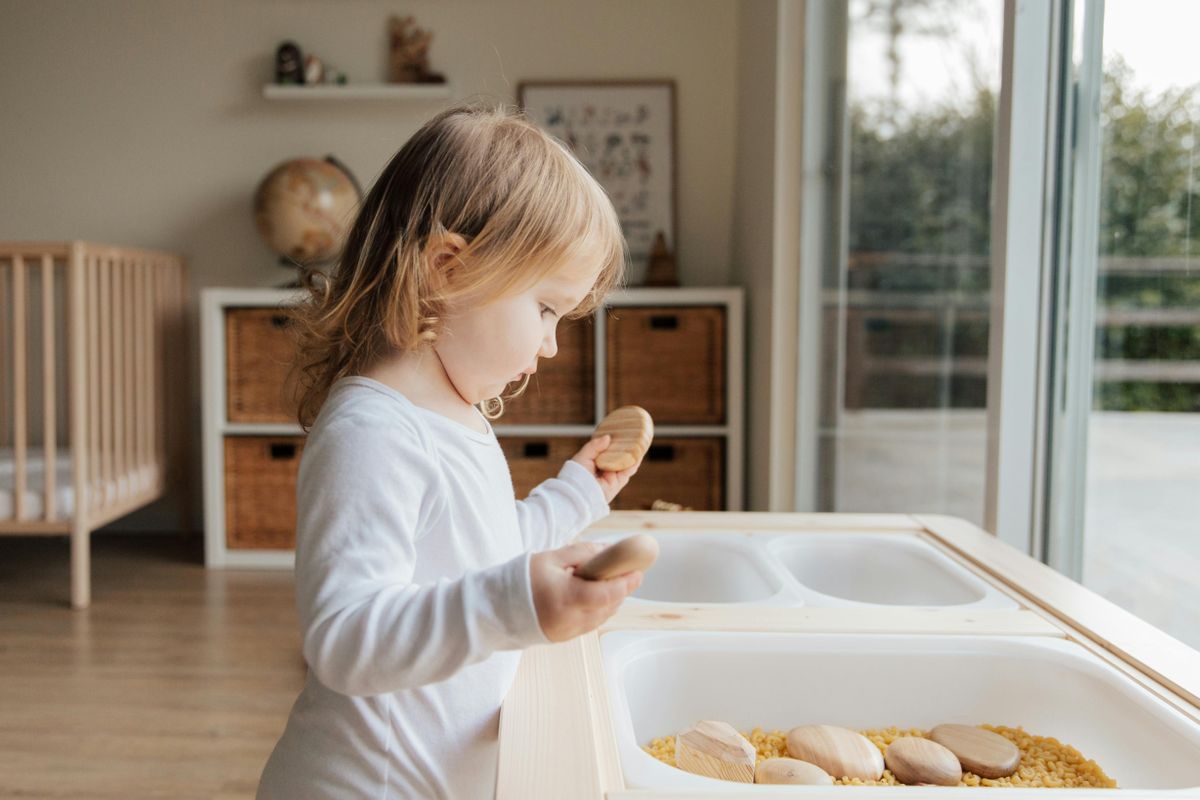
One of the most common questions families ask is, “How can we use Montessori at home without buying all the materials?” The truth is that you don’t need a fully equipped classroom or expensive wooden trays to bring Montessori principles into your home. Montessori is far more about the environment you create and the trust you place in your child’s growing abilities than it is about specific materials.
A great place to start is by making your home more child-friendly. Children thrive when they can access what they need without relying on adults, so a few simple changes go a long way. Lower a couple of shelves and display just a handful of toys or activities, rotating them every few weeks. Keep everyday items within reach—cups, plates, utensils, and a small step stool in the kitchen and bathroom can make your child feel capable and included. These small adjustments help build responsibility and self-help skills.
Practical Life activities are another powerful way to bring Montessori into daily routines, and they don’t require special supplies. You can offer simple tasks such as:
-
Pouring water from a small pitcher
-
Transferring dry beans with a spoon
-
Watering plants
-
Washing fruits or vegetables
-
Folding washcloths
Placing each activity on a small tray supports the Montessori idea of completing a task from start to finish.
Children also love participating in real household responsibilities. When we slow down and involve them meaningfully, they build confidence and a sense of belonging. Invite your child to help set the table, match socks, sweep with a child-sized broom, prepare snacks, feed a pet, or wipe small spills. These everyday contributions nurture independence and pride.
When it comes to toys, less really is more. Montessori homes benefit from intentionally chosen toys that:
-
Encourage hands-on exploration
-
Focus on one skill at a time
-
Are made from natural materials when possible
-
Avoid overwhelming lights and sounds
A smaller, thoughtful collection allows deeper focus and more imaginative play.
At the heart of Montessori is the idea of following the child. Observe what your child naturally gravitates toward—pouring water, sorting rocks, exploring outside, or examining insects—and let those interests guide what you offer at home. Supporting their curiosity leads to genuine joy in learning.
Another essential Montessori element is simply slowing down. Allow time for your child to put on shoes, prepare snacks, zip their coat, or clean up independently, even if it’s slower or a bit messier. This patience shows your child that you believe in their abilities.
Finally, Montessori isn’t just about the environment—it’s also about how we communicate. Grace and Courtesy lessons, such as teaching a child to place their hand gently on your arm if they need your attention while you’re speaking, help build patience, respect, and emotional security. Using gentle, clear language also strengthens emotional intelligence. For example:
-
Instead of “Stop whining,” try “It sounds like you need something. Use your calm voice so I can understand.”
-
Instead of “You’re fine,” try “Your face looks upset. Would you like help or time to try on your own?”
-
Instead of “Don’t interrupt,” try “I’m talking right now. When I place my hand on yours, it means I know you’re waiting.”
These small shifts help children feel seen, capable, and understood.
In the end, you don’t need special materials or a perfectly curated space to bring Montessori into your home. What children truly need is a thoughtful environment, trust in their abilities, consistent routines, space to explore, and your gentle guidance. With a few simple adjustments, your home can become a nurturing extension of your child’s Montessori experience—helping them grow into confident, capable, joyful learners.
For more Montessori information like this - we recommend reading The Montessori Toddler or The Montessori Child by Simone Davies.