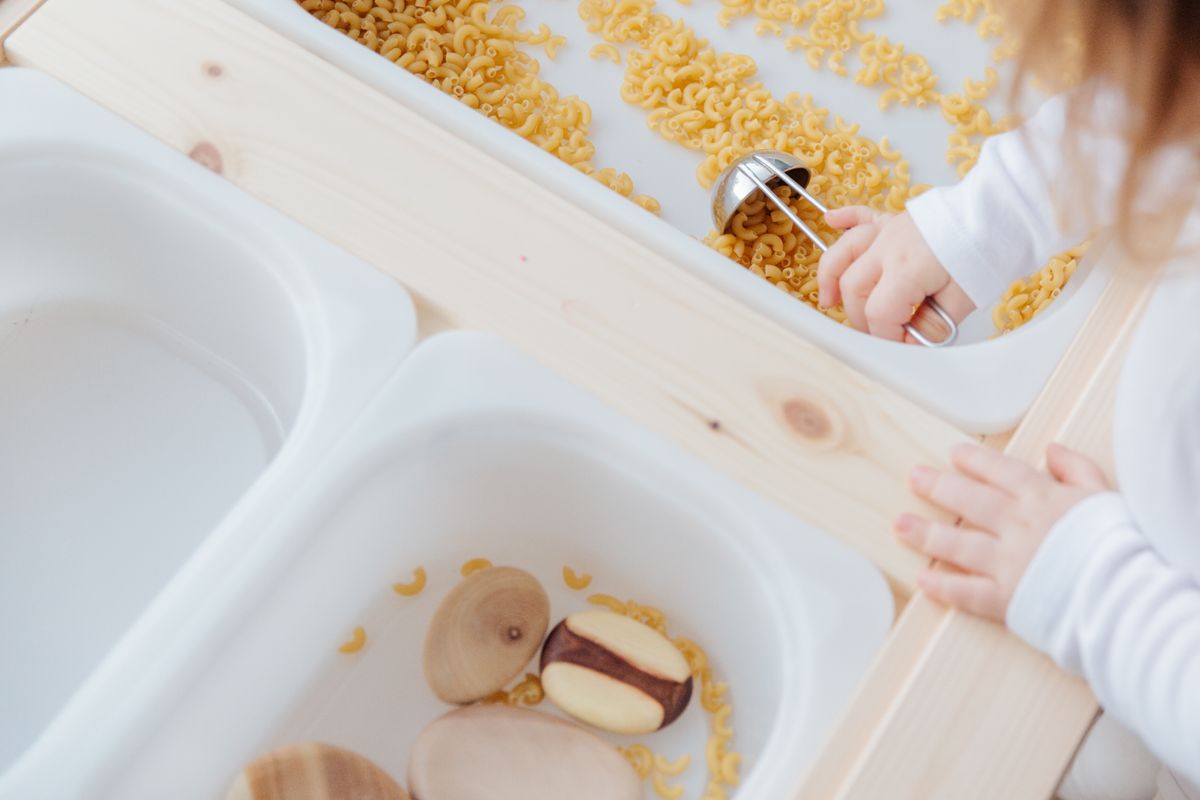
One of the first areas children are introduced to in a Montessori classroom is Practical Life. While it may appear simple on the surface — pouring water, washing tables, or buttoning a frame — this work holds deep developmental significance. Practical Life is the foundation upon which all other learning is built, supporting the child's independence, concentration, and confidence.
Misconceptions Parents Often Have About Practical Life
A common question we hear is, 'Why is my child doing chores at school?' Or, 'Shouldn't they be learning letters and numbers instead?'
The misconception is that Practical Life is busy work or something children already know how to do at home. In reality, these activities are carefully designed lessons that support the child's physical, emotional, social, and cognitive development. In Montessori, children must first learn how to learn — to focus, follow a sequence, and complete a task independently — before academic learning can truly flourish.
What Is Practical Life?
Practical means basic, useful, purposeful. Life means the way of living.
Practical Life Exercises are just that — they are exercises so the child can learn how to do living activities in a purposeful way. Maria Montessori said the first thing to realize is that the aim of these activities is not a practical one. Emphasis should be laid not on the word 'practical' but the word 'life.'
Practical Life refers to purposeful activities that reflect everyday life and help children care for themselves, others, and their environment. Examples include:
- Pouring and transferring
- Dressing frames (buttoning, zipping, tying)
- Washing hands, tables, or dishes
- Sweeping and mopping
- Food preparation
- Plant care
Each activity has a clear beginning, middle, and end, helping children develop order, coordination, concentration, and independence.
Why Practical Life Is So Important
We need to understand why these practical life exercises are so important and how they relate to the child's overall development. The mastery of the task itself is not the primary goal. Practical Life exercises may well be the most important work in the classroom. These activities lead a child to make intelligent choices and then become physically and mentally independent and responsible. The child learns to concentrate, control muscles, move and act with care, focus, analyze logical steps, and complete a cycle of activity.
Practical Life lays the groundwork for success in all areas of the Montessori curriculum. Through this work, children develop:
- Concentration and focus
- Fine and gross motor control
- Independence and self-confidence
- A sense of responsibility
- Respect for their environment and community
This is the foundation for the mental and physical work in all other areas — not just in early childhood but throughout life.
The Meaning and Purpose Behind the Work
The true purpose of Practical Life is to support the child's natural desire to say, 'I can do it myself.' When children are given meaningful work and trusted with responsibility, they gain a strong sense of competence and self-worth.
Practical Life also helps children adapt to their culture by practicing the routines and expectations of daily life. Through repetition and mastery, children develop inner discipline, patience, and pride in their work.
Practical Life and Sensitive Periods
Maria Montessori believed that children pass through phases — sensitive periods — when they have a heightened sensitivity to learning specific skills. At the 0–3 age level, we develop the skills needed for Practical Life through modeling and collaborative presentations. At the 3–6 age level, we refine these skills through formal presentations, working toward increased concentration and precision.
Practical Life strongly aligns with several sensitive periods:
- Movement: Children refine coordination and control
- Order: Children seek sequence and predictability
- Independence: Children strive to do things on their own
- Concentration: Children develop sustained focus through repetition
Areas of Practical Life
Care of Self
Exercises that aid in independence — personal care, hygiene, and personal grooming. Examples: the dressing frame, hand washing, putting on a coat. These skills build independence and self-care habits.
Care of the Environment
Outdoor and indoor activities pertaining to the care of the environment. They help the child adapt to and respect their surroundings. Activities like sweeping, cleaning, and plant care teach responsibility and respect for shared spaces.
Grace and Courtesy
These exercises involve social relationships and guide the child to learn the customs and culture of their group. Children practice social skills such as greeting others, taking turns, and resolving conflicts peacefully. With these activities the child develops grace and becomes dignified, courteous and careful in their approach.
Characteristics of Practical Life Activities
Practical Life activities are meant to resemble everyday activities. All materials are:
- Purposeful and real
- Sequential and orderly
- Concrete and hands-on
- Self-correcting
- Repetitive by choice
- Designed to fit the child's size and abilities
- Inviting: beautiful, arousing curiosity, inviting concentration
Each lesson is presented slowly and intentionally, modeling respect for the work and the child.
Final Thoughts
Practical Life is not preparation for life — it is life. These activities honor the child's natural drive to participate meaningfully in their world. By supporting independence, concentration, and confidence early on, Practical Life creates a strong foundation for lifelong learning.