
Blog
Here you will find our most recent newsletters and any educational content our team has put together
Living with Love: Daily Practice in Montessori Classrooms & at Home
Angelica Villarreal
After nearly 30 years in Montessori education, I continue to be moved daily by the quiet, powerful ways love shows up in our classrooms. Montessori has taught me that love is not just a warm feeling we offer children; it’s a practice we live. It’s visible in the respect we give every child, the trust we build with families, and the gentle, thoughtful way we support one another as educators and staff.
In all my years guiding children, observing their growth, and partnering with parents, I’ve seen how a Montessori environment becomes a place where love and respect aren’t just encouraged—they are lived. And my hope is always the same: that when children leave our school, they carry these experiences of love, peace, and belonging with them. That the values they’ve absorbed—kindness, independence, empathy, curiosity—become a forever part of who they are.
This blog explores how love shows up as a daily practice in Montessori classrooms and how parents can build a love-filled Montessori-aligned environment at home.
Love as a Daily Practice in Montessori Classrooms
Love is not abstract in Montessori education. It is active, intentional, and visible in the way children are treated, the way adults prepare environments, and the way relationships are honored. Dr. Maria Montessori believed that love is foundational to a child’s development—an energy that fuels independence, peace, and purposeful learning. When children feel loved and respected, they naturally extend that love outward.
more
The Power of Connection: How Mindful Montessori Parenting Nurtures Emotional Growth
Rebecca Preciado
In my years of experience as a toddler teacher (and now as a toddler mom) I’ve learned one powerful truth: connection comes before correction. Toddlers don’t learn emotional regulation because we tell them to “calm down.” They learn it because someone stayed with them, named their feelings, and showed them—over and over again—what calm looks like.
In the Montessori environment, we often talk about independence. But independence does not grow in isolation. It grows from secure, respectful relationships, where children feel seen, safe, and understood.
Emotional Regulation Starts With Us
Toddlers are not giving us a hard time, they are having a hard time. Their brains are still developing, especially the parts responsible for impulse control, emotional regulation, and communication. When emotions run high, they simply don’t yet have the tools to manage them independently.
As adults, we are their external regulators. This is where mindful parenting and Montessori philosophy beautifully align. When we pause, breathe, and respond rather than react, we are modeling the exact skills we want our children to develop.
As a teacher, I’ve seen it time and time again: the toddler who melts down isn’t looking for punishment or distraction, they are looking for connection. As a mom, I now feel this even more deeply. In those loud, overwhelming moments, my calm presence matters more than my words.
more
A Montessori-Inspired Approach to Screen Time
Eliisa Mesa
Why “No Screens During the Week” Can Support Calm, Independent Play
Many families want to reduce screen time but feel unsure where to begin—especially when screens are so woven into daily life. One simple and effective approach is establishing a clear boundary: no screens during the week.
While this may feel like a big shift at first, clear and consistent limits often reduce daily power struggles. When expectations are predictable, children can relax into the rhythm of the week without ongoing negotiation, which supports emotional regulation and family harmony.
The Adjustment Period
When children are accustomed to regular screen use, the first few days without screens may bring frustration, restlessness, or frequent requests. This response is normal and temporary. With consistency, many children begin to redirect their energy toward creative, independent activity and develop a greater tolerance for boredom—an important foundation for focus and self-regulation.
A Montessori Lens on Screen-Free Time
In Montessori philosophy, the environment plays a central role in supporting independence and meaningful work. Removing screens is most effective when paired with a thoughtfully prepared home environment that invites exploration. This does not require elaborate materials or a perfect playroom. A few intentional, accessible areas are often enough.
more
Toilet Learning in the Montessori Environment
Sabrina McKenzie
In Montessori, we talk about toilet learning, not “training.” The focus is on independence,body awareness, and respect for the child’s pace.
Core Montessori Principles
- Readiness over age: We observe signs rather than follow a timeline.
- Preparation of the environment: The child should be able to do everything independently.
- Freedom within limits: The adult sets up the structure; the child practices within it.
- No rewards or punishment: Internal motivation and mastery are the goal.
Typical Montessori Classroom Setup
- Step-stool for toilet and sink
- Low shelf with:
- Underwear
- Pants/shorts with elastic waist
- Stool for climbing and foot support
- Low sink with soap and towel
- Clear, calm routine (often toileting offered at regular intervals)
- Adults model and invite, never force
Signs of Readiness (What Montessorians Look For)
A toddler may be ready when several of these are present:
- Stays dry for 2+ hours
- Shows awareness of wet/dry or bowel movements
- Can walk, sit, and stand independently
- Can pull pants up/down with help
- Shows interest in the bathroom or watches others
- Can follow simple sequences (first/then)
Practical Life in Montessori: More Than Just “Everyday Tasks”
Angelica Villarreal
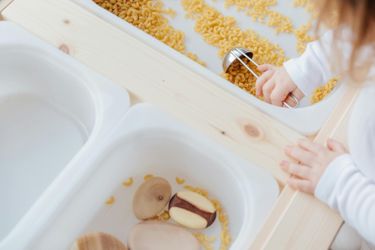
One of the first areas children are introduced to in a Montessori classroom is Practical Life.
While it may appear simple on the surface—pouring water, washing tables, or buttoning a frame—this work holds deep developmental significance. Practical Life is the foundation upon which all other learning is built, supporting the child’s independence, concentration, and confidence.
Misconceptions Parents Often Have About Practical Life
A common question we hear is, “Why is my child doing chores at school?” Or, “Shouldn’t they be learning letters and numbers instead?”
The misconception is that Practical Life is busy work or something children already know how to do at home. In reality, these activities are carefully designed lessons that support the child’s physical, emotional, social, and cognitive development. In Montessori, children must first learn how to learn—to focus, follow a sequence, and complete a task independently—before academic learning can truly flourish.
What Is Practical Life?
Practical: means basic, useful, purposeful Life: means the way of living
Practical Life Exercises are just that, they are exercises so the child can learn how to do living activities in a purposeful way. Maria Montessori said the first thing to realize is that the aim of these activities is not a practical one. Emphasis should be laid not on the word “practical” but the word “life”.
more
Less Chaos, More Connection: How Montessori Routines Bring Peace to Family Life
Rebecca Preciado
A helpful guide for parents overwhelmed by toddlerhood.
When I became a mom, I had no idea just how much energy a tiny human could hold. My son, now a spirited, curious, endlessly active 2.5-year-old, has been on the move since the moment he figured out how to crawl. He’s joyful, funny, determined… and like many toddlers, he struggles with focus, transitions, and managing his big feelings.
Around the same time he was born, I also stepped into my work in Montessori administration. The timing couldn’t have been more aligned. The more I learned about Montessori philosophy—its respect for the child, its emphasis on independence, and its deep trust in the natural rhythm of development—the more I saw my own child reflected in it. Montessori helped me understand him, and he helped me appreciate Montessori on a whole new level.
And honestly? It helped me feel less overwhelmed.
Toddlers are beautiful, busy little beings. But parenthood, especially the first time around, can feel like a lot. What transformed our home life more than anything else were Montessori-inspired routines. Not rigid schedules, but gentle rhythms that create just enough structure for both of us to breathe easier.
more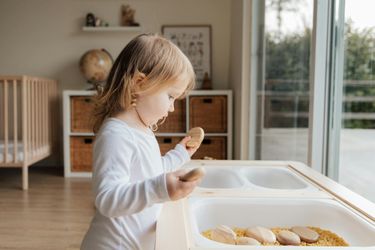
How to Bring Montessori Home: Simple Ideas for Parents
Eliisa Mesa
One of the most common questions families ask is, “How can we use Montessori at home without buying all the materials?” The truth is that you don’t need a fully equipped classroom or expensive wooden trays to bring Montessori principles into your home. Montessori is far more about the environment you create and the trust you place in your child’s growing abilities than it is about specific materials.
A great place to start is by making your home more child-friendly. Children thrive when they can access what they need without relying on adults, so a few simple changes go a long way. Lower a couple of shelves and display just a handful of toys or activities, rotating them every few weeks. Keep everyday items within reach—cups, plates, utensils, and a small step stool in the kitchen and bathroom can make your child feel capable and included. These small adjustments help build responsibility and self-help skills.
Practical Life activities are another powerful way to bring Montessori into daily routines, and they don’t require special supplies. You can offer simple tasks such as:
-
Pouring water from a small pitcher
-
Transferring dry beans with a spoon
more

Book Recommendations
Eliisa Mesa

YMM Nutrition Guidelines and Lunch Ideas
Eliisa Mesa
Dear Parent,
As part of our licensing requirements, we are to monitor and educate the children and families in our care about nutrition and healthy foods. Well-balanced meals provide the nourishment children need to grow, think, fight infection, and fuel their bodies. We’d like to provide a brief handout as a reminder regarding our school nutritional guidelines and some ideas for healthy lunches.
Please follow the following Plate Model when packing your child’s lunch for school. It is important to include at least one source of protein and one source of vegetables in each lunch. Please attempt to prepare fresh meals to the best of your ability and refrain from using highly processed/pre-packaged foods.
Please do not pack products with excessive added sugars such as candy, cookies/donuts with sugar coating, juices/sodas or other products with high added sugar content.
RECIPES/IDEAS: (PLEASE REMEMBER TO REPLACE ANY NUT PRODUCTS WITH SUNFLOWER SEED BUTTER OR ANOTHER NON-NUT SUBSTITUTE)
Lunches/breakfasts/snacks:
more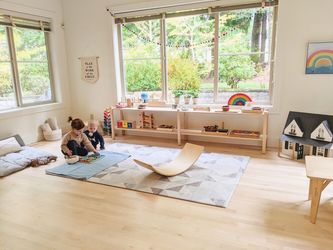
Montessori at Home
Angelica Villarreal
Infants
Creating a Montessori environment doesn’t have to wait until your children are older. This is a great time to begin this transition. You can slowly adapt as your baby grows. Create an environment that allows them to explore freely as they begin to become mobile.
- Cover electrical outlets and remove objects that can hurt your baby.
- Use baby gates to delineate their play spaces and keep them safe.
- Make their bedroom child-friendly by placing a mattress on the floor and age-appropriate toys within reach. This encourages them to move from sleeping to playing without your assistance once they're able to crawl and eventually walk.
- Once your baby can sit, try using a small table and chairs for mealtimes, snack time and activity time, rather than using a highchair.
Tasks for Two- and Three-Year Olds
Yes, even toddlers and young preschoolers can delight in doing many activities around the house. Letting your children participate in the daily management of the household will help them feel confident and proud.
Some examples are listed below:
- Load spoons into dishwasher, dust furniture, help feed animals.
- Put away silverware, put away toys after play, fold dish towels.
- Dig and pull away weeds, dry small dishes, stir orange juice.
- Load washer, unload dryer, spray and wipe mirrors, sweep(small broom)
- Assist with stirring in cooking, bring in newspaper, wipe table.
- Pour milk (small pitcher), set table, mop small area.
- Tidy magazines, sofa pillows, entertain infant –bring diapers, etc.
- Brush teeth, wash face, dress, and undress