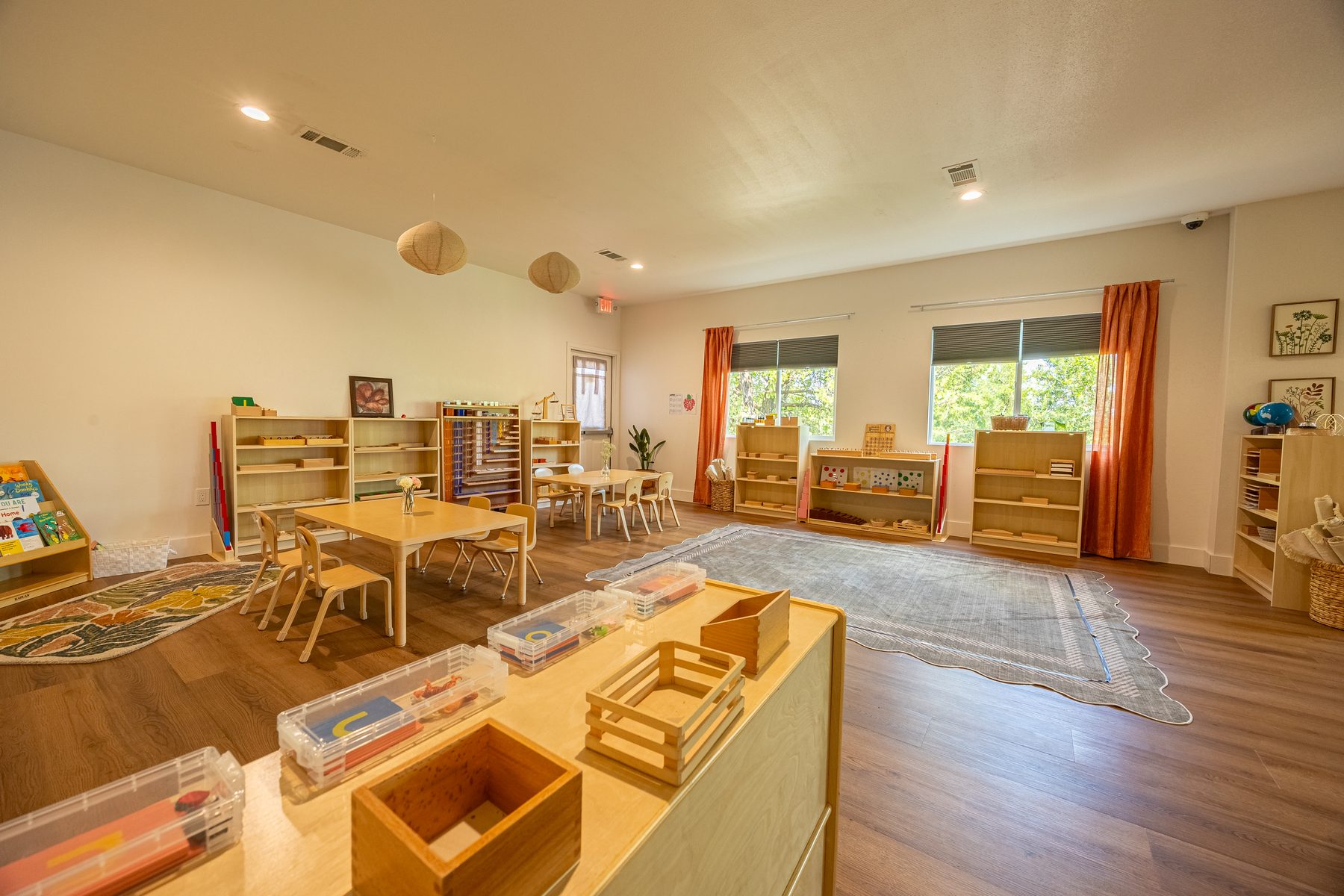
Infants
Creating a Montessori environment doesn't have to wait until your children are older. This is a great time to begin this transition. You can slowly adapt as your baby grows. Create an environment that allows them to explore freely as they begin to become mobile.
- Cover electrical outlets and remove objects that can hurt your baby.
- Use baby gates to delineate their play spaces and keep them safe.
- Make their bedroom child-friendly by placing a mattress on the floor and age-appropriate toys within reach. This encourages them to move from sleeping to playing without your assistance once they're able to crawl and eventually walk.
- Once your baby can sit, try using a small table and chairs for mealtimes, snack time and activity time, rather than using a highchair.
Tasks for Two- and Three-Year Olds
Yes, even toddlers and young preschoolers can delight in doing many activities around the house. Letting your children participate in the daily management of the household will help them feel confident and proud. Some examples:
- Load spoons into dishwasher, dust furniture, help feed animals.
- Put away silverware, put away toys after play, fold dish towels.
- Dig and pull away weeds, dry small dishes, stir orange juice.
- Load washer, unload dryer, spray and wipe mirrors, sweep (small broom).
- Assist with stirring in cooking, bring in newspaper, wipe table.
- Pour milk (small pitcher), set table, mop small area.
- Tidy magazines, sofa pillows, entertain infant — bring diapers, etc.
- Brush teeth, wash face, dress, and undress.
Tasks for Three- to Six-Year-Olds
At the preschool age, a child is ready to do many things by and for him/herself. For a child to be successful, he/she needs to be taught each task in small steps, with lots of time to practice. Children want to do things their parents are doing, and if you take the time to include your child in household tasks, the time you spend together will be 'quality time' as well as a time to get things done.
Practical Life Activities
- Dressing him/herself
- Let him/her choose clothes to wear in the mornings (give limited choices that are all acceptable to you)
- Add a low bar in the clothes closet so the child can reach clothes on hangers
- Putting own clothes in a laundry basket or bag
- Sorting socks and other small pieces of clothing, folding own shirts and pants
- Putting clothes in drawers
Housecleaning
- Have child-size utensils in a handy spot (bucket, sponge, pan, brush, etc.)
- Have low shelves or storage boxes for the child to put away his/her things
- Making his/her own bed if time permits in the mornings
Cooking
- Have utensils that the child can use when helping in the kitchen
- Let the child use skills like cutting and spreading to help prepare meals for the family (children are often more willing to eat foods that they have prepared)
- Set aside a portion of a low shelf in the refrigerator for foods a child can snack on; have a small pitcher for water or juice
- Store everyday dishes in a low cabinet so the child can reach them to set the table or put them away after washing
Sensorial Activities
Take time to 'smell the roses!' Enjoy experiences of the five senses with your child.
- Name tastes, odors and aromas, the texture of things, shades of color, shapes and sizes of things with your child.
- Play 'I Spy' with colors and shapes.
- Compare lengths or sizes of things.
- Compare objects by weight, using your child's two hands as a balance scale.
- Listen to natural sounds, musical sounds, noisy or quiet sounds, animal sounds, people's voices and name them, match them, compare them.
Preparation for Math
Count, count, count!
- Use one-to-one correspondence in setting each place setting for meals.
- Count blocks, books, dolls, etc. as you drive in the car.
- Point out numerals (start with 0–9) in the environment.
- Count in a rhythm with the child ('one' clap, 'two' clap...).
- Write a numeral as a clue ('Can you get this many carrots for the salad?')
- Sing songs with numbers in them ('This old man, he played one...')
Preparation for Language Arts
Read, Read, Read!
- Help your child memorize favorite books by reading them over and over.
- Chant nursery rhymes and poems with your child.
- Play 'I Spy', using the initial sounds in words.
- Play rhyming games with your child.
- Use lower case letters when writing for your child, especially his/her name.
- Use phonetic sounds instead of letter names with your child.
Repeated experiences in these four areas, during the first two years in a Montessori classroom, will prepare him/her for a successful experience in the last year in the three-year cycle of the Montessori preschool program.